


-
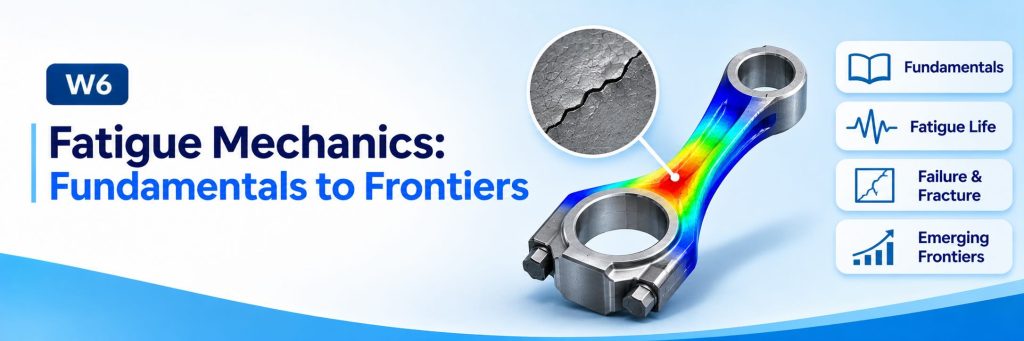
HCF, LCF and very-high-cycle (gigacycle) fatigue
-
Multiaxial, variable-amplitude and mixed-mode loading
-
Notch, size, mean-stress and surface effects
-
Thermo-mechanical fatigue and creep–fatigue interaction
-
Fretting, contact and rolling-contact fatigue
-
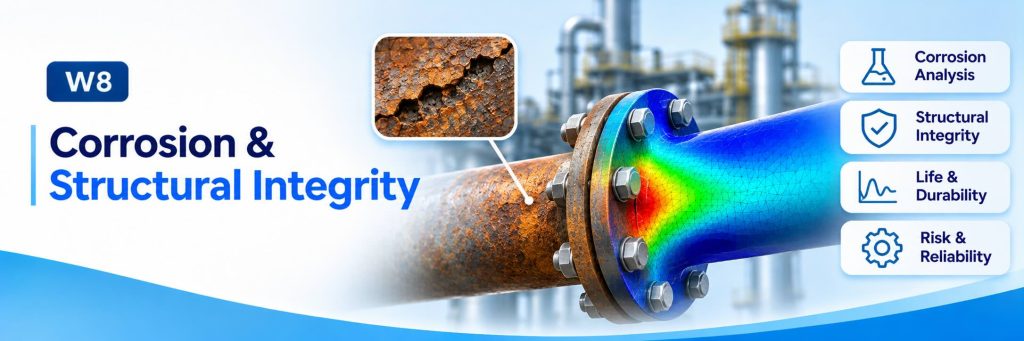
Corrosion fatigue and environment-assisted cracking
-
Cyclic plasticity, crack initiation and short cracks
-
Multiscale modelling: atomistic to macro-scale
-
LEFM and EPFM; J-integral, M-integral and VCCT
-
XFEM, cohesive-zone, phase-field and peridynamic models
-
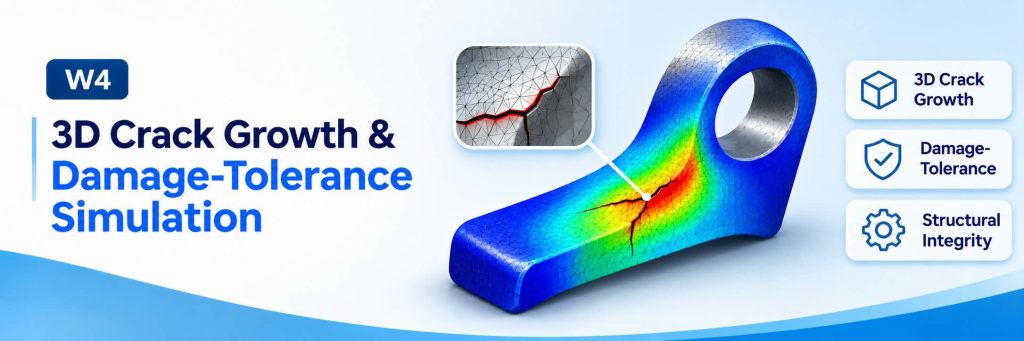
3D non-planar crack growth; multiple-site damage
-
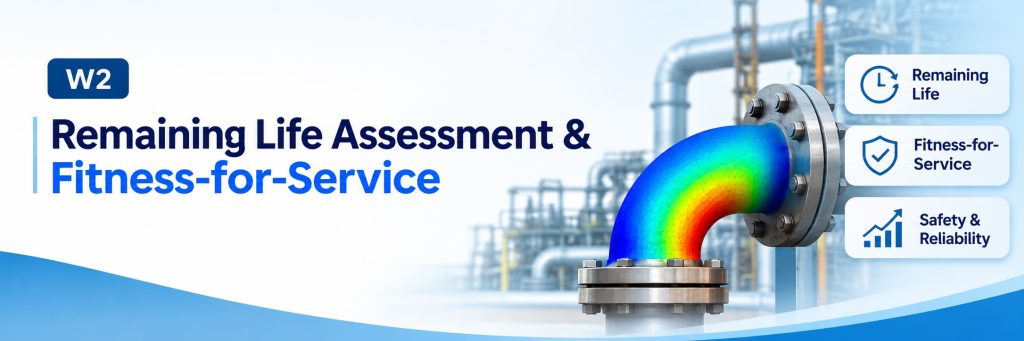
Fitness-for-service: API 579-1/ASME FFS-1, BS 7910, R6
-
Probabilistic fracture mechanics
-
Ductile, dynamic and mixed-mode fracture
-
Continuum damage mechanics
-
Multiscale fracture modelling: atomistic to macro-scale
-
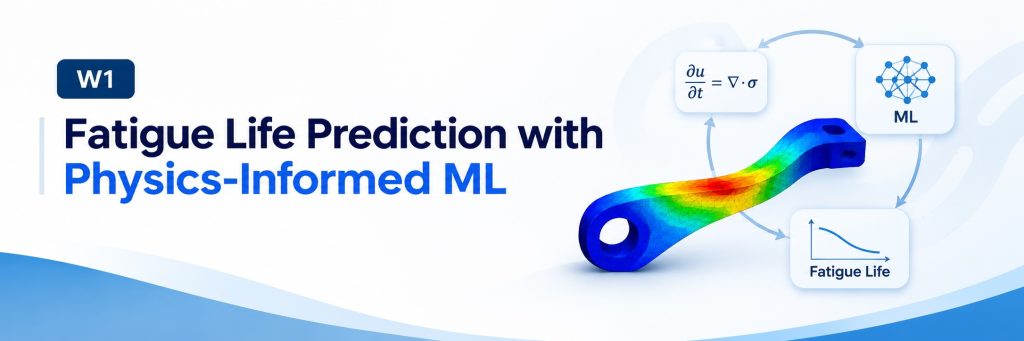
Physics-informed and hybrid ML for fatigue life prediction
-
Surrogate models and uncertainty quantification
-
Prognostics and health management
-
Virtual testing and simulation-led certification
-
AI-assisted fractography and defect detection
-
Fatigue databases and learning from small data
-
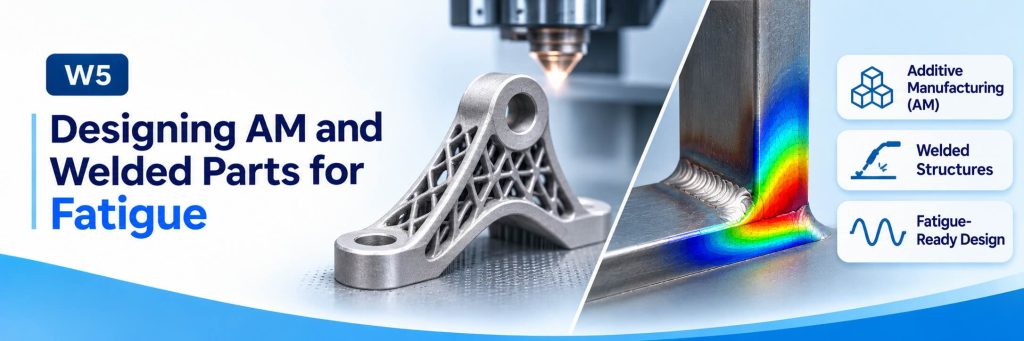
AM metals: defects, roughness, residual stress, qualification
-
Casting, forging, machining and heat-treatment effects
-
Composites and multi-material structures
-
Polymers, elastomers and rubber durability
-
Advanced steels, light alloys, superalloys, high-entropy alloys
-
Concrete and infrastructure materials
-
Peening, coatings and residual-stress engineering
-
Durability of recycled and sustainable materials
-
Nominal, hot-spot, effective-notch and structuralstress (master S-N) methods
-
Post-weld improvement: HFMl,burr grinding, TIG dressing
-
EN 1993-1-9:2025, IIW recommendations and sector codes
-
Welding residual stress and distortion
-
Bolted, riveted and adhesively bonded joints
-
Weld imperfections and acceptance criteria
-
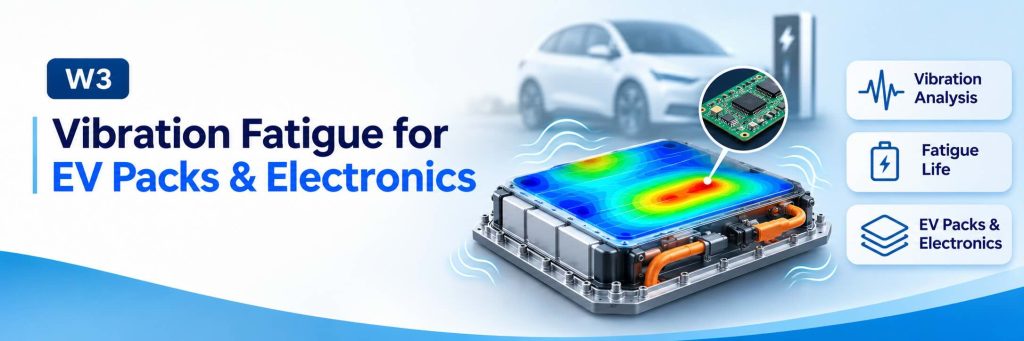
EV battery packs: road loads and random-vibration fatigue
-
Battery mechanical abuse and AIS-156 qualification
-
e-axles, motors, gears and bearings
-
Power modules: SiC/IGBTwire-bond and die-attach fatigue
-
Solder-joint and package thermo-mechanical fatigue
-
Charging infrastructure and connectors
-
Thermal-cycling and combined-environment testing
-
Two-shift and flexible operation: creep-fatigue life use
-
Hydrogen embrittlement and hydrogen-assisted crack growth
-
Nuclear: environmental fatigue, ageing, PHWR life extension, SM Rs
-
Wind turbines: blades, towers, foundations, drivetrains
-
Solar structures under wind-induced vibration
-
Pressure vessels, piping and boiler components
-
Fatigue, fracture and crack-growth test methods
-
Accelerated testing; thermography-based fatigue limits
-
X-ray CT, SEM/EBSD and digital image correlation
-
Miniature specimens from in-service material
-
S-N, £-N and da/dN-LiK data generation
-
Correlating tests, analysis and simulation
-
ASTM, ISO, EN, ASME, BIS and IIW standards
Publications
-
Last date to submit Abstract : 15 - January-2027
-
Last date to submit full Paper : 15 - March - 2027
More details mail to info@fatiguedurability.com
Submit your abstract to abstract@fatiguedurability.com
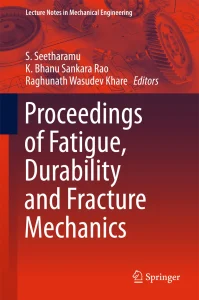
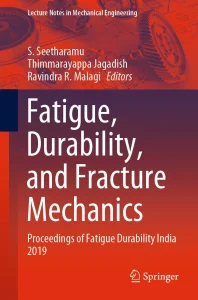
Previous Publications

Final workshop date will be announced shortly, for more information mail to info@fatiguedurability.com